
The Science Behind Blue Light and Your Night Hormone
This page summarizes published science about blue light and circadian rhythms for general education. Wavelengths between 450 and 480 nanometers interact with cells in the eye that help regulate melatonin — a hormone associated with the body's sleep-wake cycle in research literature.
View the Three Levels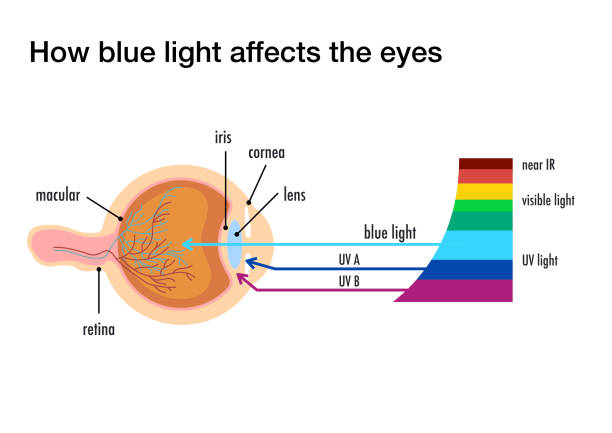
What Happens at 450–480 Nanometers
Visible light spans roughly 380 to 700 nanometers. The blue-cyan band between 450 and 480 nm is particularly potent for circadian signaling because melanopsin — a light-sensitive pigment in intrinsically photosensitive retinal ganglion cells (ipRGCs) — absorbs energy most efficiently in this range. When you look at a phone held at typical reading distance, these cells register illuminance comparable to early morning outdoor light.
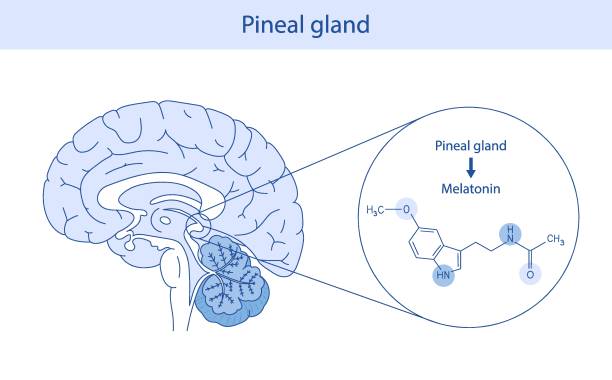
The signal travels via the retinohypothalamic tract to the suprachiasmatic nucleus (SCN), your master circadian clock. The SCN then instructs the pineal gland to reduce melatonin synthesis. This cascade can begin within minutes of exposure and persist for ninety minutes or longer after the light source is removed, depending on intensity and duration.
Incandescent bulbs emit relatively little energy at 450–480 nm compared to white LEDs, which is why reading under a warm lamp produces a smaller melatonin suppressive effect than reading the same text on a backlit tablet at identical room brightness.
Research Highlights You Should Know
Educational use only. We summarize third-party research for informational purposes. Nothing on this page diagnoses, treats, cures, or prevents any disease or sleep disorder. Consult a licensed professional for personal health decisions.
| Study Focus | Key Finding | Practical Takeaway |
|---|---|---|
| Tablet vs. book (Chang et al.) | In that study, evening e-reader use was associated with delayed melatonin onset (~1.5 hours) | Consider paper books in the final hour if you want less evening light exposure |
| Blue-enriched LED exposure | Research reported ~50% melatonin suppression at 450 nm and 40 lux in controlled conditions | Dim ambient lighting after sunset |
| Two-hour screen sessions | Some studies note changes in REM proportion in following sleep cycles | Shorten total evening screen duration, not just pre-bed window |
| Morning blue light exposure | Correctly timed light may advance circadian phase in research settings | Reserve bright blue light for mornings, not nights |
These findings do not mean all screen use is harmful — context matters. Daytime screen exposure helps maintain alertness. The issue is temporal mismatch: blue-rich light when your biology expects darkness.
Metabolism and Immunity: What Researchers Study
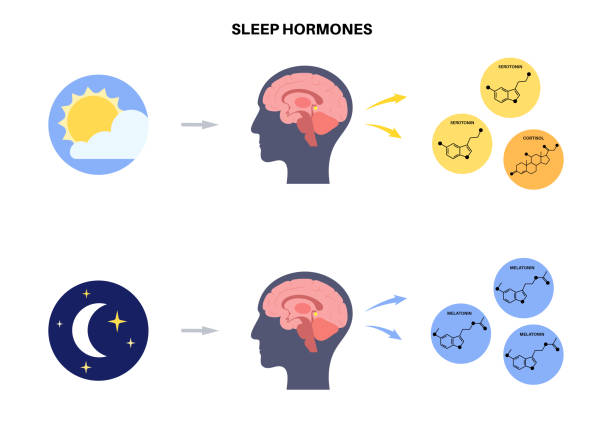
Melatonin is studied for its relationship to hunger signals such as leptin and ghrelin. Some papers note associations between evening light exposure, melatonin timing, and next-day appetite patterns — findings that apply to study populations, not individual readers of this Website.
Melatonin's antioxidant properties are also explored in laboratory and animal models. Human evidence is still evolving. We share these topics to explain why scientists investigate evening light — not to suggest that changing screen habits will produce specific metabolic or immune outcomes.
A screen-free bedtime buffer is a voluntary lifestyle choice. It is not a medical treatment. Controlled studies have sometimes observed changes in overnight melatonin levels with reduced evening light; your experience may differ.
Practical Light Management at Home
- Replace cool-white bulbs in bedrooms and bathrooms with 2700K or "warm white" options rated below 3000K color temperature.
- Use motion-activated night lights with amber LEDs (590 nm peak) for bathroom trips instead of turning on overhead fixtures.
- Enable system-wide night modes on devices at sunset, but treat them as a partial measure — they do not replace screen-free time.
- Measure with a lux meter app (held at eye level) to identify hotspots above 30 lux in your pre-bed environment.
Combine environmental changes with our Three Levels program for a layered approach that addresses both light exposure and behavioral habits.
Health & Safety Guidelines
General Information Only
Content on this page summarizes published research for educational purposes. It does not diagnose conditions or prescribe treatment protocols.
Photosensitivity
Individuals with photosensitive conditions should discuss light exposure changes with a qualified eye care professional before altering home lighting.
Melatonin Supplements
Over-the-counter melatonin is not a substitute for reducing blue light exposure. Consult a pharmacist or clinician before combining supplements with lifestyle changes.
Shift Workers
Night-shift schedules require inverted light strategies. Seek occupational health guidance tailored to your rotation pattern.
Events Calendar
Blue Light & Sleep Science Talk
Deep dive into ipRGC signaling, melatonin amplitude, and home lighting audits with live audience Q&A.
Register InterestSummer Solstice Light Workshop
Learn to manage extended daylight hours and maintain screen-free evenings during long summer nights.
Register InterestFAQs
Red and amber wavelengths (above 590 nm) minimally suppress melatonin compared to blue light. Very bright red light can still affect circadian signals at high intensities, but typical amber night lights are among the safest options for overnight visibility.
Front-lit e-ink devices with built-in LEDs do emit some blue light, though generally less than LCD tablets. Unlit e-ink models reflect ambient room light only — pair them with warm lamps for the lowest melatonin impact.